
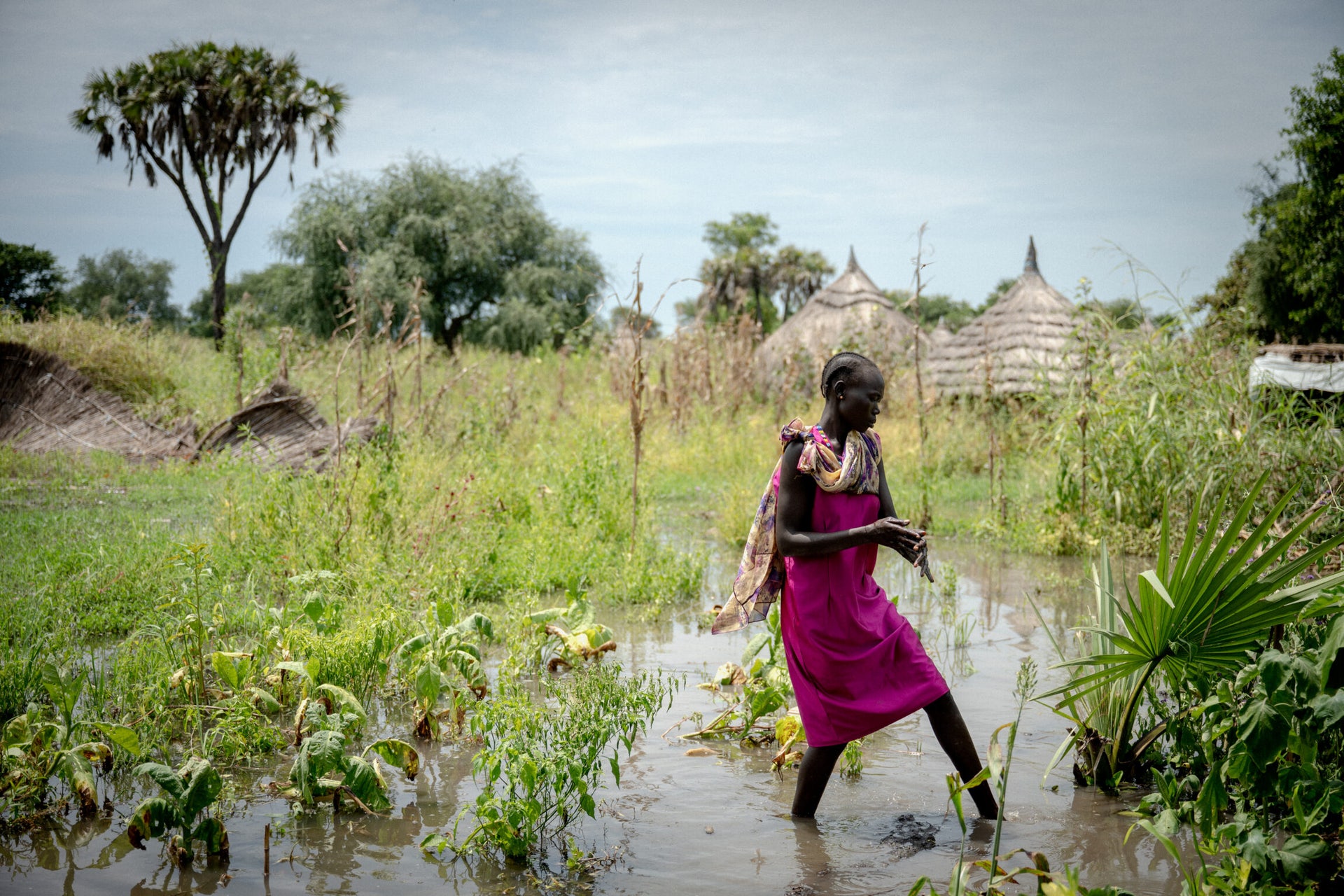
DanChurchAid calls on world leaders to overcome political divisions, accelerate emissions reductions and scale up investment in climate adaptation.
ANTALYA, TÜRKIYE, 9 November 2026 – As the UN Climate Summit COP31 opens in Antalya, DanChurchAid urges governments to put geopolitical disagreements aside and work together to confront an increasingly dangerous climate crisis.
The summit takes place against a challenging international backdrop. Wars, energy insecurity, trade disputes and growing political polarisation are dominating global politics. At the same time, the world is entering a new climate reality.
Recent reports from the UN Environment Programme (UNEP) confirm that global warming is set to exceed 1.5°C above pre-industrial levels. While returning to 1.5°C remains possible, it will require urgent and deep emissions reductions, alongside a fundamental shift in how societies prepare for climate impacts.
Mattias Söderberg, Global Climate Lead at DanChurchAid, comments:
“The world is facing multiple crises, but the climate crisis has not gone away. We are entering a new climate reality, and the consequences are becoming increasingly severe. Governments cannot afford to put climate action on hold while dealing with other challenges.”
International cooperation must deliver
COP31 follows a difficult year for international climate diplomacy, with major disagreements over climate finance and fossil fuels continuing to divide countries.
DanChurchAid stresses that the UN climate process remains essential, even when negotiations are difficult.
“The Paris Agreement has shown that international cooperation can deliver results. We should not give up on multilateralism just because it is difficult right now. Countries have different interests, and compromises will be necessary. I hope COP31 will start constructively and demonstrate that governments can still find common solutions to global challenges,” says Söderberg.
Emissions must fall – and adaptation must accelerate
DanChurchAid calls for renewed commitment to deep emissions reductions, including implementation of the agreement to transition away from fossil fuels.
At the same time, the prospect of exceeding 1.5°C makes climate adaptation more urgent than ever. Incremental adjustments will increasingly be insufficient, requiring transformative approaches to protect communities, food systems, infrastructure and livelihoods.
“Reducing emissions remains absolutely essential. The faster we transition away from fossil fuels, the more we can limit future warming. But we must also prepare for the climate impacts we can no longer avoid. Mitigation and adaptation are not competing priorities. We urgently need both,” says Söderberg.
DanChurchAid also calls for increased investment in adaptation from governments, businesses and investors, alongside stronger efforts to address loss and damage where adaptation is no longer sufficient.
At COP30, governments agreed to triple international adaptation finance by 2035. COP31 must help turn that commitment into concrete action, including predictable and accessible support for the world’s most vulnerable countries.
“Last year, governments made an important commitment to triple adaptation finance. Now we need to see how that promise will be delivered. Climate adaptation is not only about protecting vulnerable communities. It is also an investment in economic stability, jobs and development. Governments, businesses and investors all have a role to play” Söderberg concludes.
Notes to editors
- COP31 takes place in Antalya, Türkiye, from 9–20 November 2026.
- UNEP’s 2026 Limiting Overshoot report concludes that global warming is set to exceed 1.5°C, while a return to that level remains possible with urgent action.
- Follow the DanChurchAid COP30 engagement here
Contact
Mattias Sõderberg
Global Climate Lead, DanChurchAid
+45 29 70 06 09
Company/Organization
DanChurchAid
Meldahlsgade
Copenhagen, 1613
Denmark
Visit our Einpresswire newsroom