
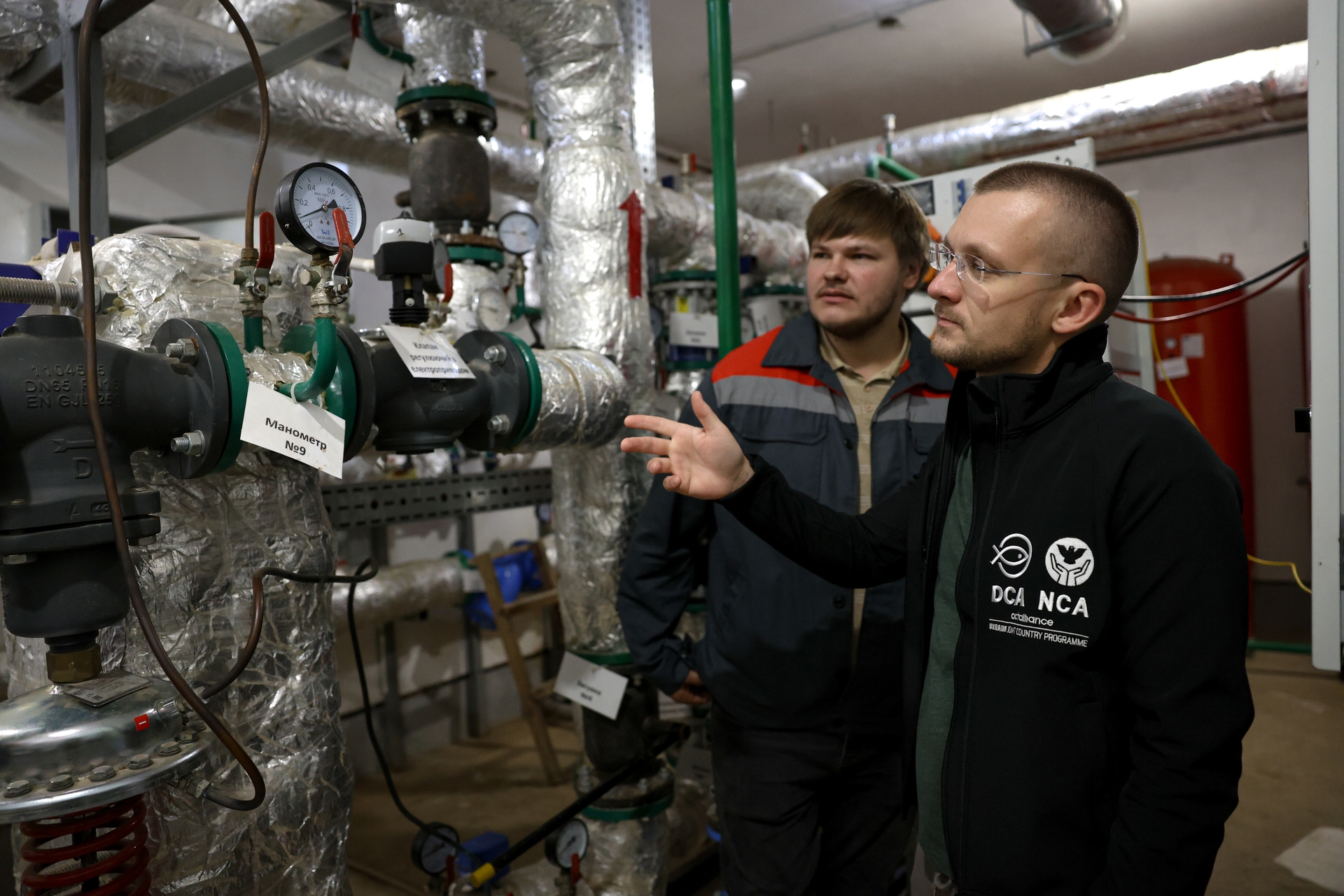
For the residents of Mykolaiv, last winter was a severe test of resilience. Due to relentless attacks on energy infrastructure, the frontline city was frequently left without power. But the most dangerous consequence of these blackouts was the loss of heat: when electricity went out, pumping stations shut down, hot water stopped circulating through pipes, and indoor temperatures inside apartments plummeted to a critical 10 degrees Celsius.
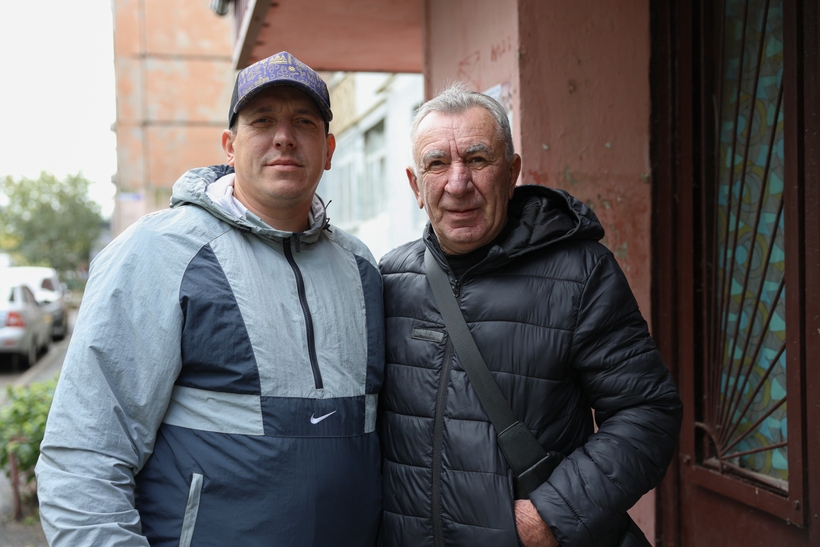
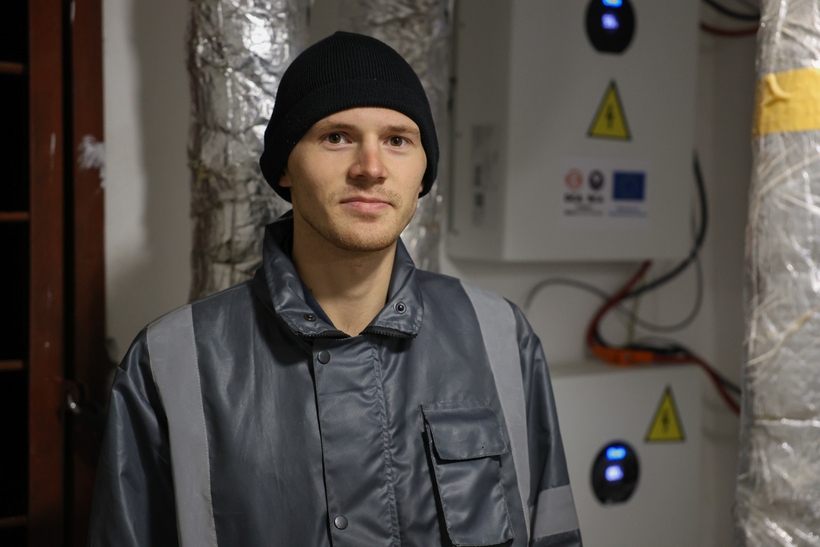
“It was indeed very cold on some days when the power was turned off and the pumps couldn’t operate. Well, we dressed as warmly as possible—heaps of socks, sweaters, robes—and that’s how we stayed warm,”recalls local resident Vasyl (in the picture on the right).
Due to its proximity to the sea and high air humidity, freezing temperatures in Mykolaiv feel particularly harsh. Even a mild frost in such weather chills you to the bone, making stable heating in homes a matter of survival. It was especially difficult for families whose men are defending the country on the front lines.
“I am a serviceman, so I spend almost all my time on the front line in a dugout. These systems you’ve installed are great. My girls were really freezing, and now I hope this problem will be solved,”says Anton, Vasyl’s neighbour (on the left in the photo above).
Resident Olena recalls that period with anxiety, remembering how every day brought outages and freezing radiators from noon until morning, making beds feel like they were outside while visiting relatives with a small child suffered in the bitter cold.
For the staff of the municipal enterprise Mykolaivoblteploenerho (MOTE), maintaining heat in the city became a daily battle against exhaustion. To prevent the systems from freezing, they had to rely on generators and bypass system to run heat directly. However, these temporary measures created new issues: diesel generators hummed under windows, triggering complaints from residents, while the bypass damaged expensive automation equipment.
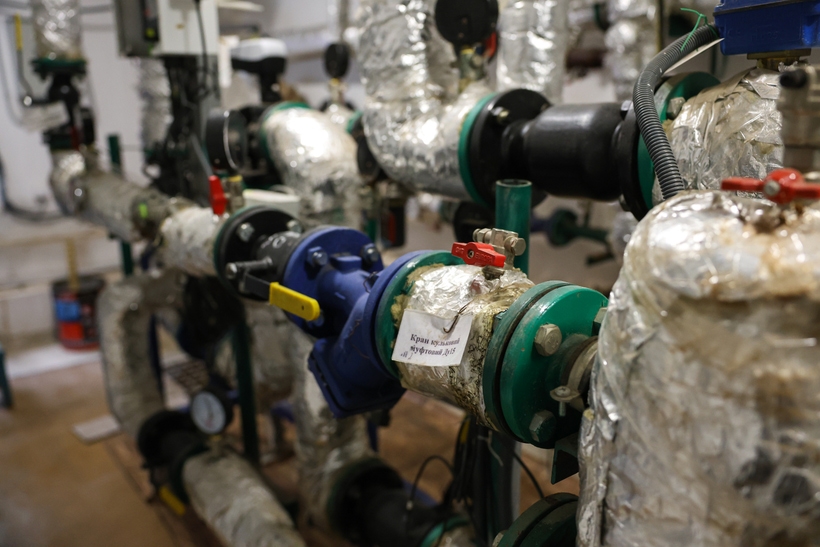
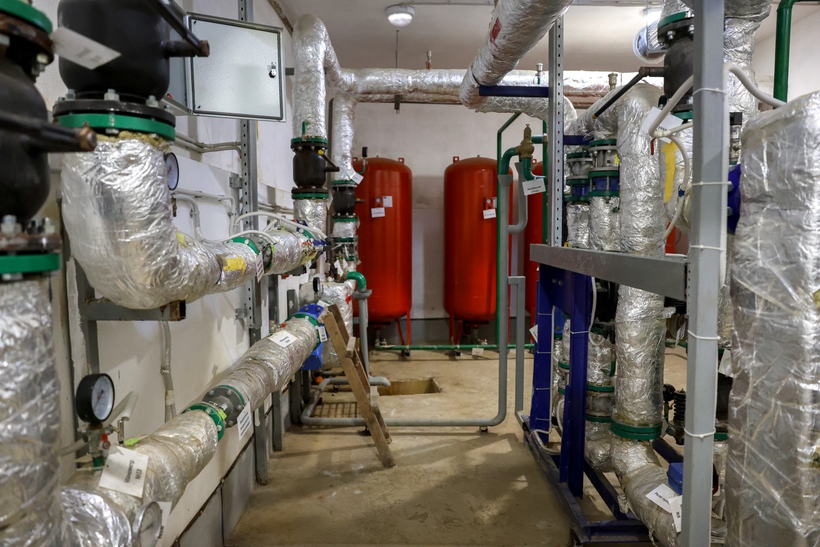
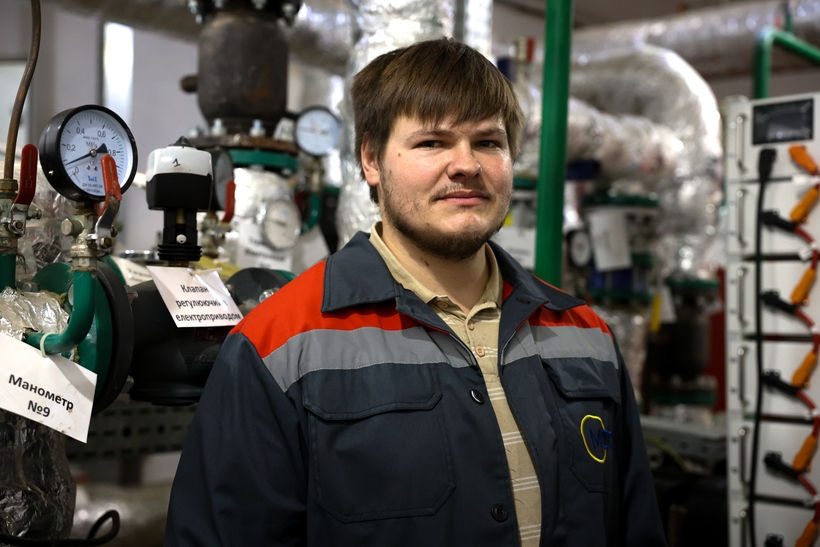
“Last winter, we coped by deploying generators and connecting through the bypass—meaning directly. But this harms the pumping equipment and frequency converters. They break down because of this, and unfortunately, we cannot buy new ones because they cost an absolute fortune,”confirms automation engineer Andriy Karpov.
The solution to this problem was the installation of specialized Uninterruptible Power Supply systems.
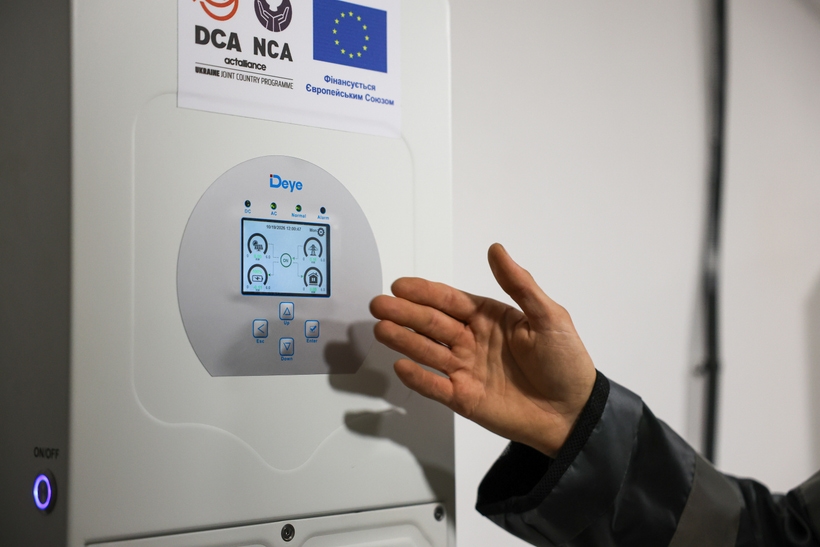
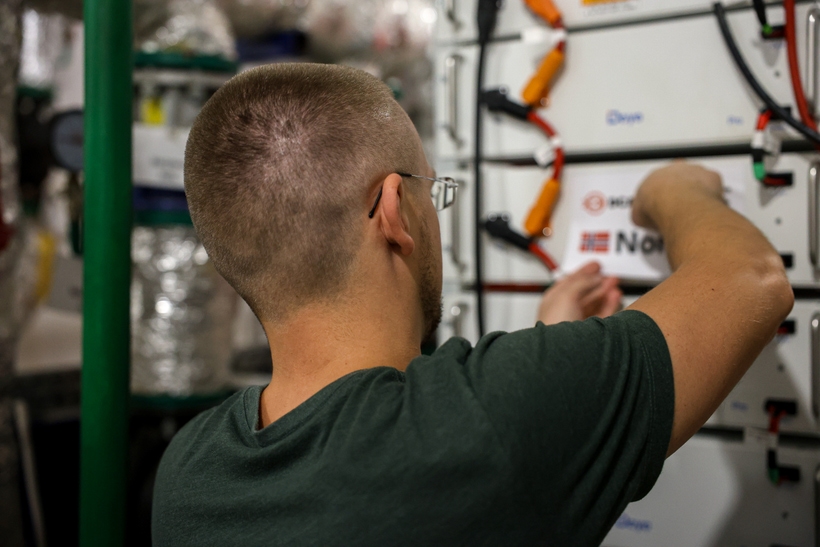
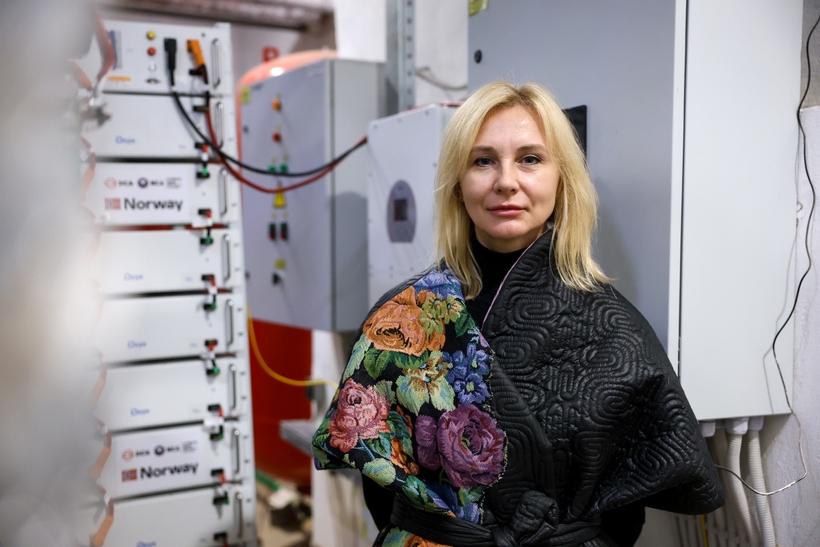
“UPS systems were our dream… we dreamed of them last year. We appealed to absolutely all donors and to the city asking to buy them. First of all, there were many complaints from residents about the cold, and due to the lack of such systems, our heat supply kept stopping. We were forced to connect the bypass. Because of this, we lost a high-capacity 315 kW frequency converter last year. It was extremely expensive for us to purchase and reinstall a new one. Everyone refused to help us except your organization,”recalls Larysa Kosei, a first-category economist in the department for cooperation with international organizations.
The assistance covered two levels of the city’s heating network. For individual heating points (IHP) located directly in the basements of multi-storey buildings, 129 UPS systems were provided for 124 buildings and over 24,000 residents. Additionally, higher-capacity UPS systems were delivered for 8 central heating points (CHP), covering an additional 56 buildings and over 2,900 beneficiaries.
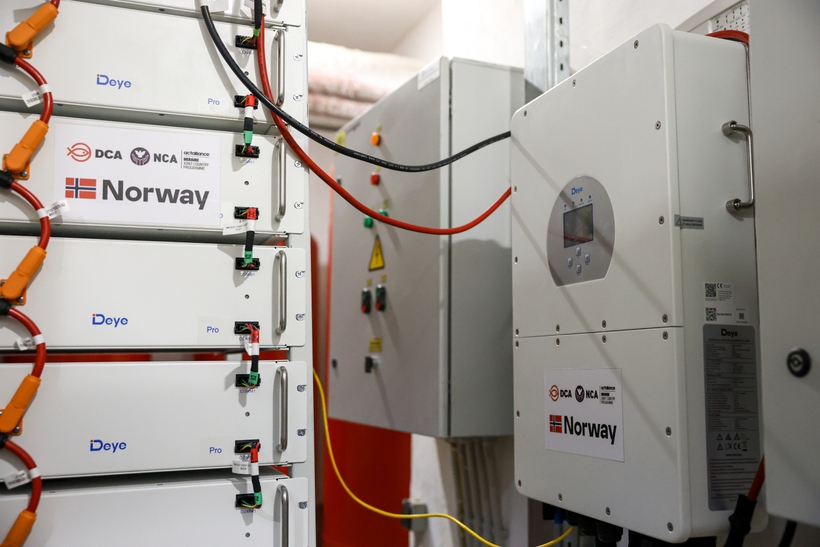
“These units make it possible to supply electricity to the pumps when power is out or when there are grid issues. They allow us to operate for 10–15 hours, depending on the power of our pumps and the additional equipment consumed by our heating points,”explains Serhiy, a heating point maintenance engineer.
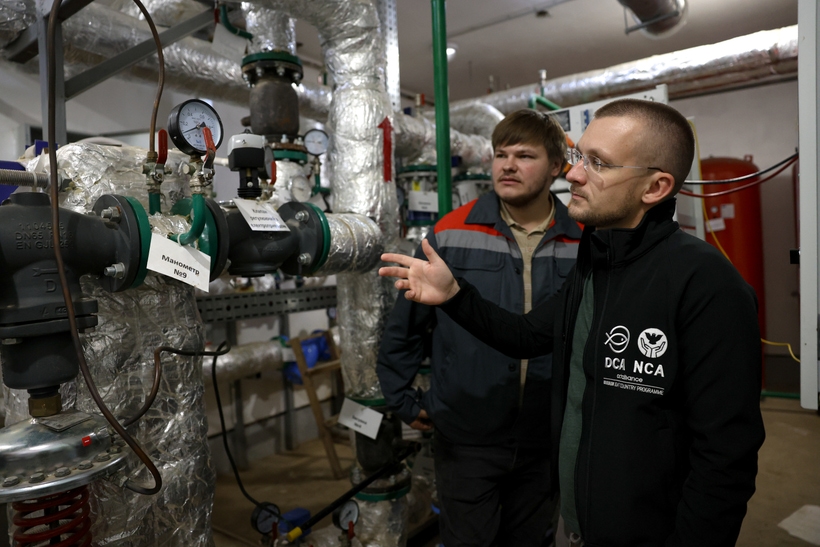
“Right here, this equipment ensures the operation of one central heating point that supplies heat to more than 5 apartment buildings—roughly 800 to 900 consumers. When operated correctly, these systems should maintain heat for over 12 hours,”notes Andriy Karpov.
The new equipment allows the heating system to automatically continue working during blackouts without noisy generators, manual restarts, or the risk of equipment failure.
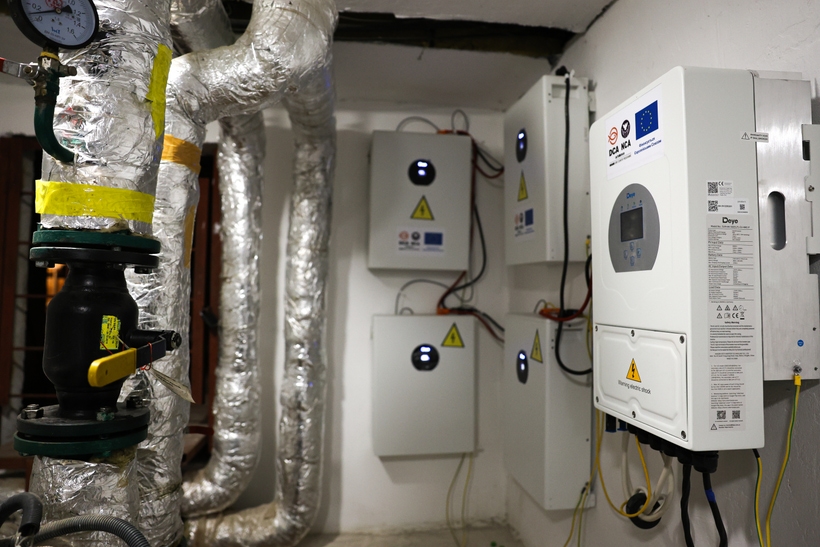
“Your assistance is the solution to our problem. It guarantees an uninterrupted heat supply to city residents and protects us even during short-term blackouts. It doesn’t just save us during scheduled power outages; it helps us endure full blackouts as well,”concludes Larysa.
Thanks to the joint support of partners and donors, thousands of families in Mykolaiv will be able to face the cold season in warmth and safety.
About the project
In terms of “Support to heating service providers,” DCA-NCA, in partnership with ADRA Ukraine, the NGO “Youth of Ukraine,” and ME “Mykolaivoblteploenerho,” combined multiple funding streams—from Norad, EU-FPI, Danida SPA Top up, and the Korsholm Family Foundation—to install 137 uninterruptible power supply (UPS) systems for the city. These systems will power Central and Individual Heating Points during power outages, ensuring continuous heating supply to the homes of over 27,000 Mykolaiv residents across 180 buildings.
Thanks to this support, 100% of the municipal enterprise’s needs for various types of UPS sources for heating substations across the entire city were fully covered. The initiative’s total budget exceeds $740,000.