
DCA-NCA Ukraine
When wounded service members arrive at the hospital in Volyn, Father Nazarii Babii does not begin with a prayer. First, he helps carry their belongings. He greets them and asks whether they need anything. Then he waits, giving them time to decide whether they want to talk.
“Simply being there. Making contact,” is how Father Nazarii describes one of the main principles guiding his work.
He does not believe that supporting someone always requires complicated words. Still, he keeps learning, including how to recognise when and how to offer help. That is why he travelled to Lviv, joining 438 participants, including 129 women, who since the start of 2026 have taken part in psychological training sessions under the project “Clergy and Communities for Mental Health Support: Innovative Support Practices during the War in Ukraine”. The sessions were held in Kyiv and Lviv.
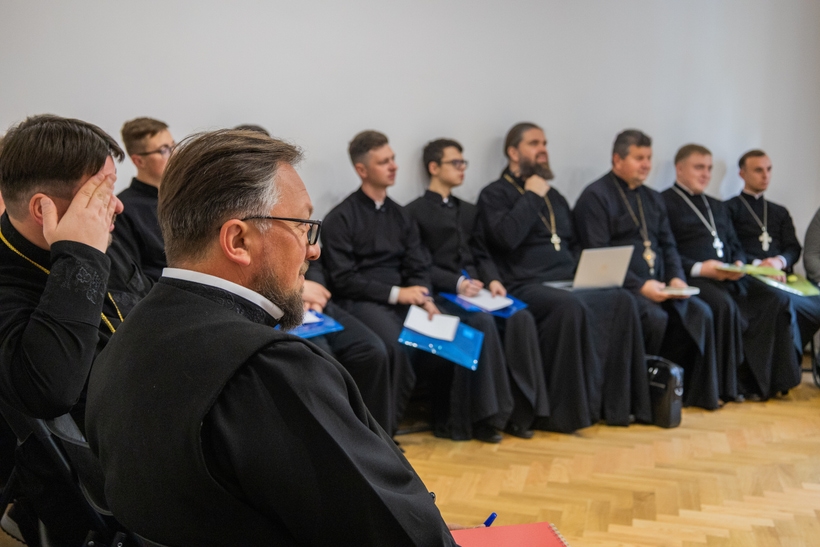
The training equips clergy, priests’ wives, seminarians and active parishioners of the Orthodox Church of Ukraine with skills in psychological first aid, trauma-sensitive communication, pastoral counselling, self-care and community needs assessment. Participants travelled from across Ukraine, excluding occupied territories, from Kharkiv, Sumy, Zaporizhzhia, Donetsk, Kherson, Volyn, Rivne, Lviv, Zhytomyr, Kyiv and Zakarpattia regions, among others. They include parish priests, church rectors, military and medical chaplains, monks and nuns, seminarians, priests’ wives, and active laypeople and volunteers. Many serve communities near the front line, where access to professional psychological support is limited or entirely absent.
For most priests, the training offered not only knowledge that is vital in wartime, but also a chance to meet like-minded colleagues, discuss shared challenges and exchange experience.
Priests usually live in a kind of closed system — their own village, their own district. In that isolation, without contact with other clergy, one can grow old without ever really connecting. Other professions have conferences and gatherings where people share experience. The church largely lacks that — it’s only just beginning to develop,says participant Father Nazarii Furman.
Serhii and Natalia: From a Hospital Corridor to a New Parish
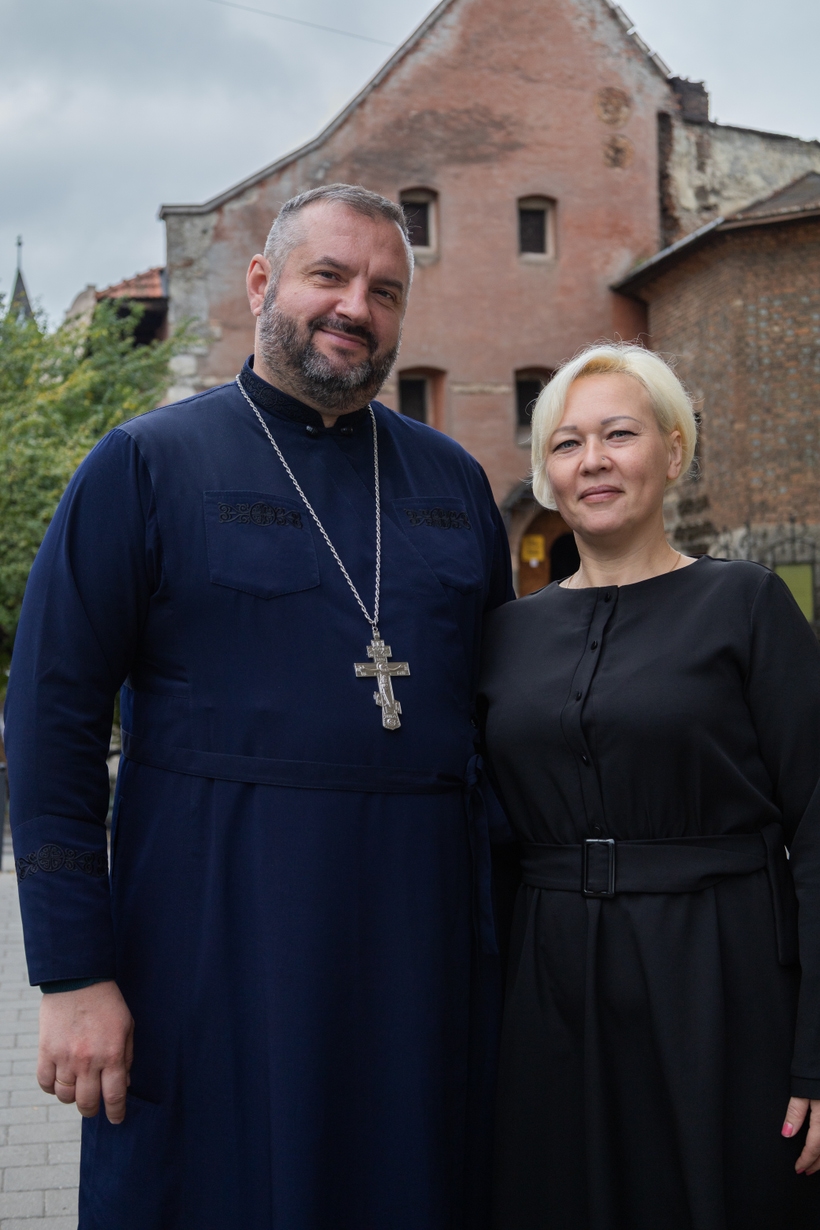
Behind the numbers are people with very different paths to ministry: Serhii and Natalia met in 2022 at a regional hospital in Kharkiv oblast. Natalia had been working as a nurse for 26 years, while Serhii came to the hospital as a volunteer, helping people in need. The full-scale war tested them both, but it was also the beginning of their life together. They married in 2023, and today they are working together to establish a community of the Orthodox Church of Ukraine, hoping to support people living with the realities of war.
Natalia remembers the first months of the full-scale war as a time of constant danger. Shelling continued, and hospital staff had to seek shelter right at their workplace.
“My son had just turned seven. We slept on mattresses, and whenever shelling began, we ran to hide in the lift shaft. Hospital staff gathered there with their families, children and even pets. We waited until the shelling stopped and then returned,”Natalia recalls.
Faith had been part of Serhii’s life since childhood. A year ago, he became a priest of the Orthodox Church of Ukraine, serving what is almost the only congregation of its kind in his community, as most churches in Kharkiv region still conduct services in Russian. Today, together with Natalia, he hopes to build a community that welcomes local residents, service members, veterans and their families, offering them a place to worship in a Ukrainian church.
“I want to create a community that people need — a place where they can come, talk to one another and find support,”father Serhii explains.
The couple has already erected a roadside worship cross, held services at various locations and taken part in commemorating fallen Ukrainian defenders. However, they still do not have a church of their own. Because of the security situation and the lack of permanent premises, they move forward one small step at a time. They understand that supporting people goes beyond spiritual ministry: the war affects mental health, family relationships and people’s sense of security. That is why training in mental health support is important to them.
“We are not taking anything away from anyone, and we are not competing with anyone. We simply want to do our work, develop the community and be useful to people,” Serhii says.
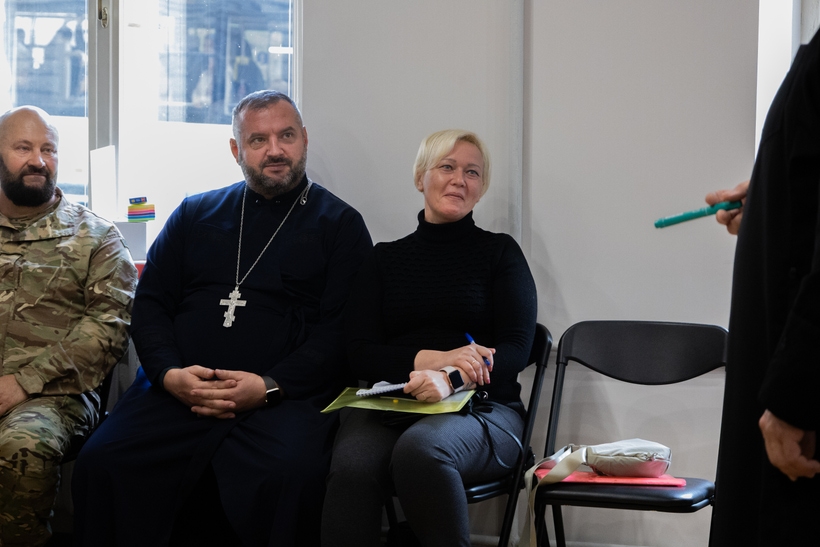
Despite the constant shelling and the threat of drone attacks, they do not want to put their plans on hold until the war is over. They believe that even small steps matter when it comes to helping people who need support.
Father Nazarii: Waiting for the Patient to Speak First
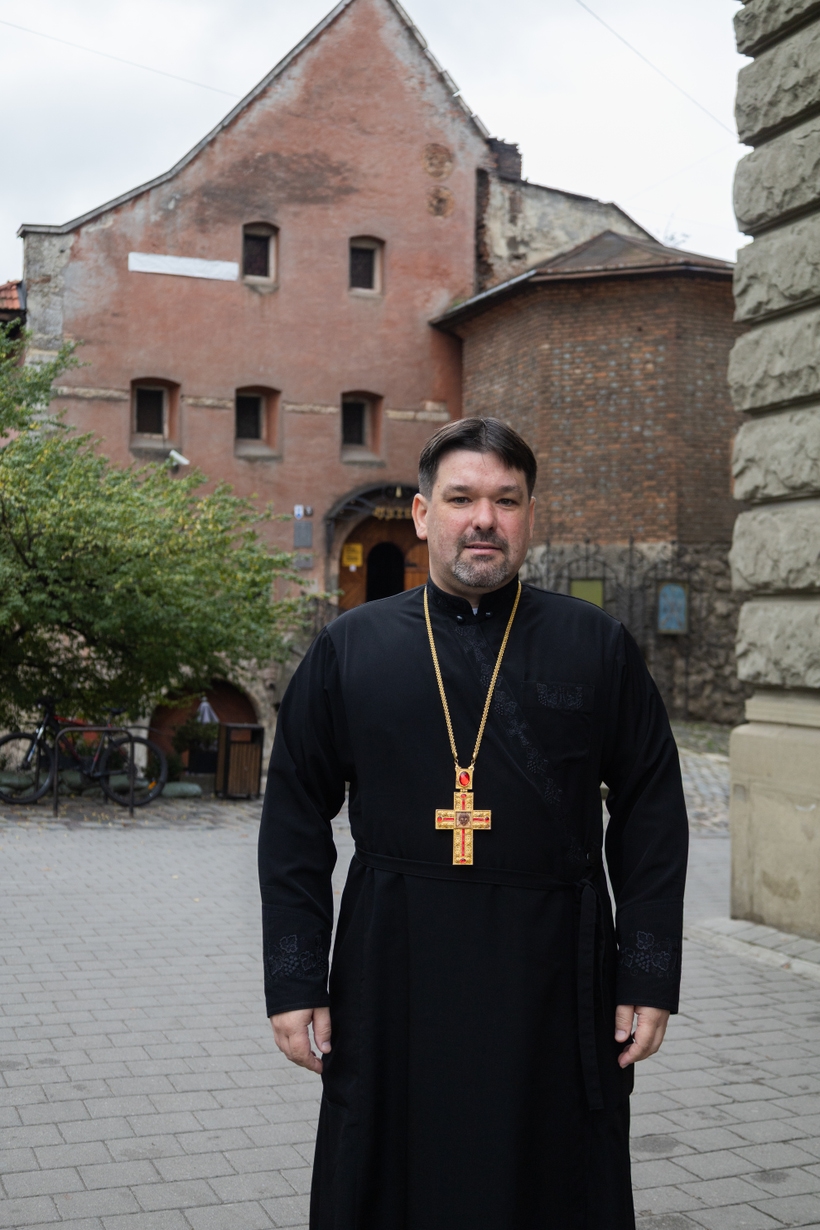
Father Nazarii Babii heads the Pastoral Care and Health Department of the Volyn Eparchy, serves as a healthcare chaplain at the Volyn Regional Clinical Hospital and teaches at the Volyn Orthodox Theological Academy. Over time, he noticed that service members’ attitudes towards chaplains were changing. Not everyone was ready to accept spiritual support, and some greeted a priest with distrust.
“They probably see you as someone who did not stand up for them. That is how I came to understand it,” he shares, reflecting on what he observed.
So he asked the hospital management for permission to meet wounded people arriving by evacuation, and began helping them with their belongings from their first moments in the hospital. During ward rounds, he does not insist on conversation or impose religious greetings. Trust, he says, must be built through respect, attentiveness and a willingness to accept when someone declines support.
I enter the ward, introduce myself, explain who I am and ask whether they might need anything. Some people look at me, and it is immediately clear that they do not want to talk at that moment. So I leave them alone. When the time comes, they may start a conversation themselves,father Nazarii explains.
Father Nazarii also trains new healthcare chaplains. When the field began to develop in Ukraine, there was no established training programme. In 2023, he contributed to developing one, and, according to him, approximately 100 specialists were trained over around a year and a half. The training covers not only spiritual care but also tactical medicine, psychological first aid and basic first aid. He continues to learn himself, including through the training on psychological trauma, which helps him choose ways of communicating that do not cause further distress.
“The world has changed. Views have changed, and approaches have changed. You have to keep developing all the time. That is why I support this kind of training. Just invite me,” Father Nazarii says.
Father Viktor: From the Trenches to the Altar
Father Viktor Nechyporuk was living abroad when Russia launched its full-scale invasion. He came home and joined a volunteer battalion, serving as a grenade launcher operator. Military service was familiar to him: he had served in a special unit of the State Border Guard Service from 2010 to 2013. His relationship with faith, he says, began at the age of three.
“My mother told me that when I was little, I would get down on my knees and recite the Our Father.”
Raised in a religious family, he later spent nearly two years as a monastery novice, where he found inner peace and began to see faith not just as a parishioner, but as someone called to serve. In the trenches, he carried a card with Psalm 90 and read it daily. He was wounded in the Orikhiv sector in late 2023, an injury that ended his combat role. By then he had already been studying at the Orthodox Theological Academy since 2021. Still a fourth-year student, he sought the bishop’s blessing and was told simply: “Next week — ordination.” He was ordained deacon, then priest. In 2025, he served his first Easter as a priest in Dobropillia, Donetsk region, and graduated from the academy.
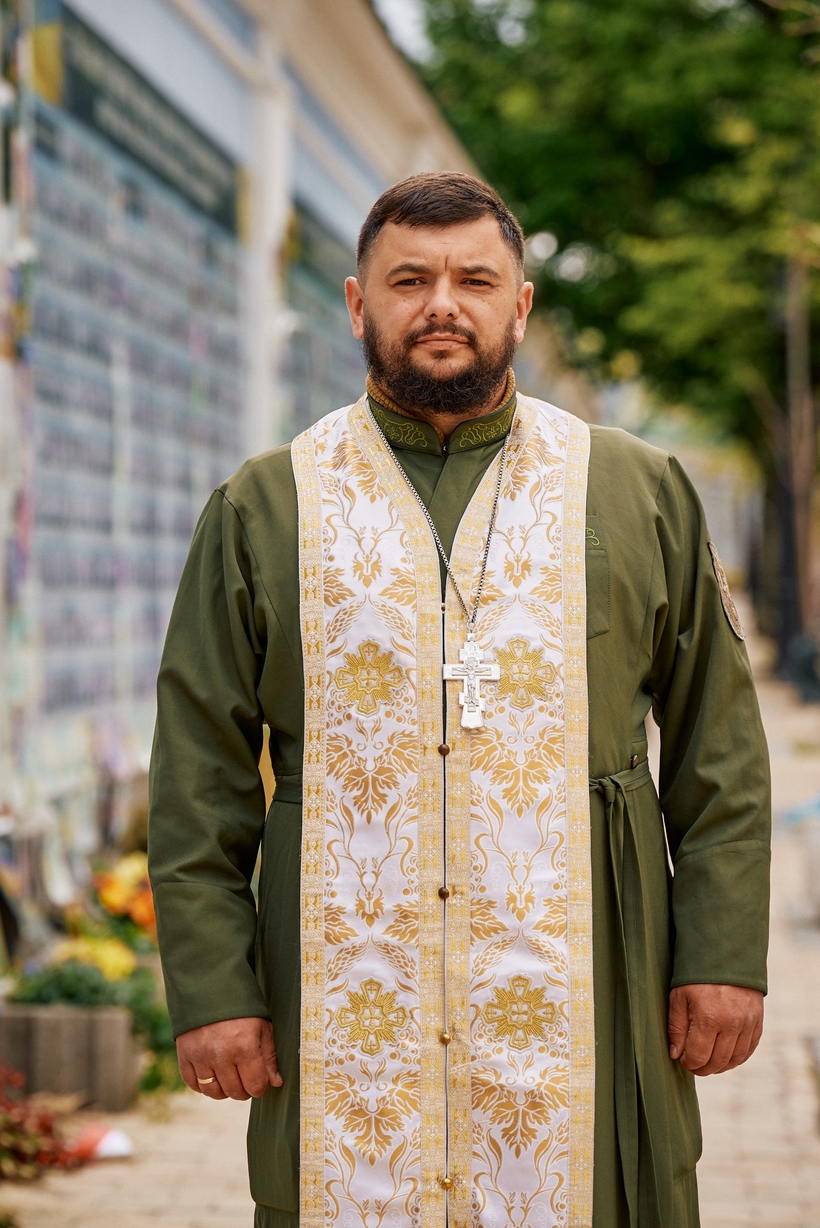
Serving with his unit since its formation, Father Viktor now conducts funerals, supports bereaved families, visits the wounded and attends award ceremonies. He admits this is harder than combat.
It was easier to run with a grenade launcher through the tree lines than to stand in front of people holding the Cross… every day you encounter human pain, fear, loss, doubt, and hope.father Victor says.
He joined the training to build practical skills. The session on psychological trauma taught him to recognise when someone needs professional help beyond pastoral care.
“A psychologist is never an enemy of a chaplain. We work in tandem… everyone should know the basic methods of support — because there may be a moment when no one else is nearby.”
A second training, on community needs assessment, pushed him to think beyond his current role. He envisions a parish that responds to people’s real needs.
I understand that I will not always be only a military chaplain. When the war is over, I will combine parish ministry with chaplaincy,father Victor says.
The paths of Serhii and Natalia, Father Nazarii and Father Viktor could hardly be more different: a nurse and a volunteer building a new parish, a hospital chaplain, a former soldier turned priest. What they share is a belief that support starts with presence, respect and attention to what people actually need, and that these skills can be learned.
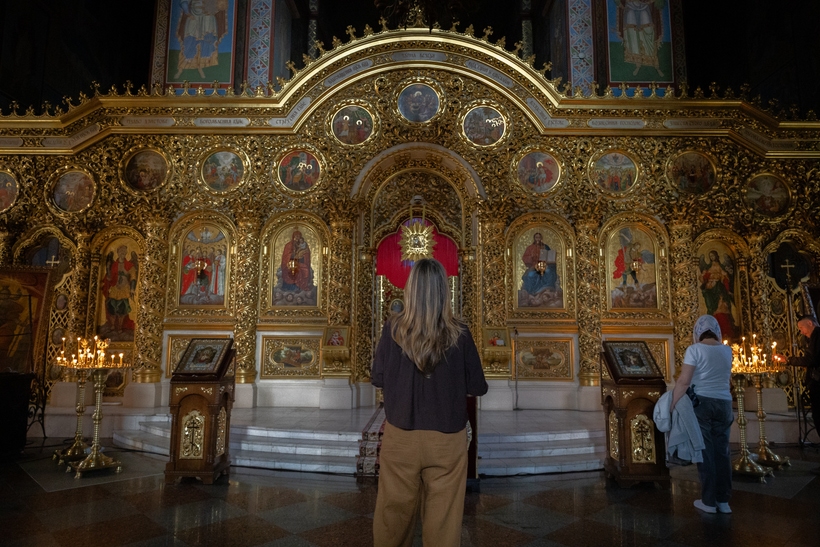
Sometimes, support begins with a prayer. At other times, it starts with a simple greeting, help with someone’s belongings and a willingness to wait a little.
About the project
The project “Clergy and Communities Supporting Mental Health: Innovative Practices for Support During the War in Ukraine” is implemented by Eleos-Ukraine in partnership with DanChurchAid and Norwegian Church Aid in Ukraine, with financial support from the Government of Norway (Norad), in cooperation with the Lviv Theological Seminary of St John the Apostle and Evangelist.
