

Achuei waves as the tightly packed truck pulls away. Among the passengers are her six children. The oldest is 11 years old – the youngest is not even two.
The children are completely alone, surrounded by strangers. The thought pierces deep into her heart. But the war is drawing closer with each passing day, and she simply does not dare let the children stay in Sudan.
It is early 2025. Achuei can only afford six tickets out of the country. She cannot leave one of the children behind. So she stays behind herself as the truck disappears into the dust.
The farewell is one of the hardest things she has ever endured – a mother’s worst nightmare. Her thoughts race through her mind: Will they reach the border? Will they have anything to eat? Will she ever see her children again?
But war forces people into desperate choices. Achuei knows this all too well – for this is not the first time she has faced such a situation.
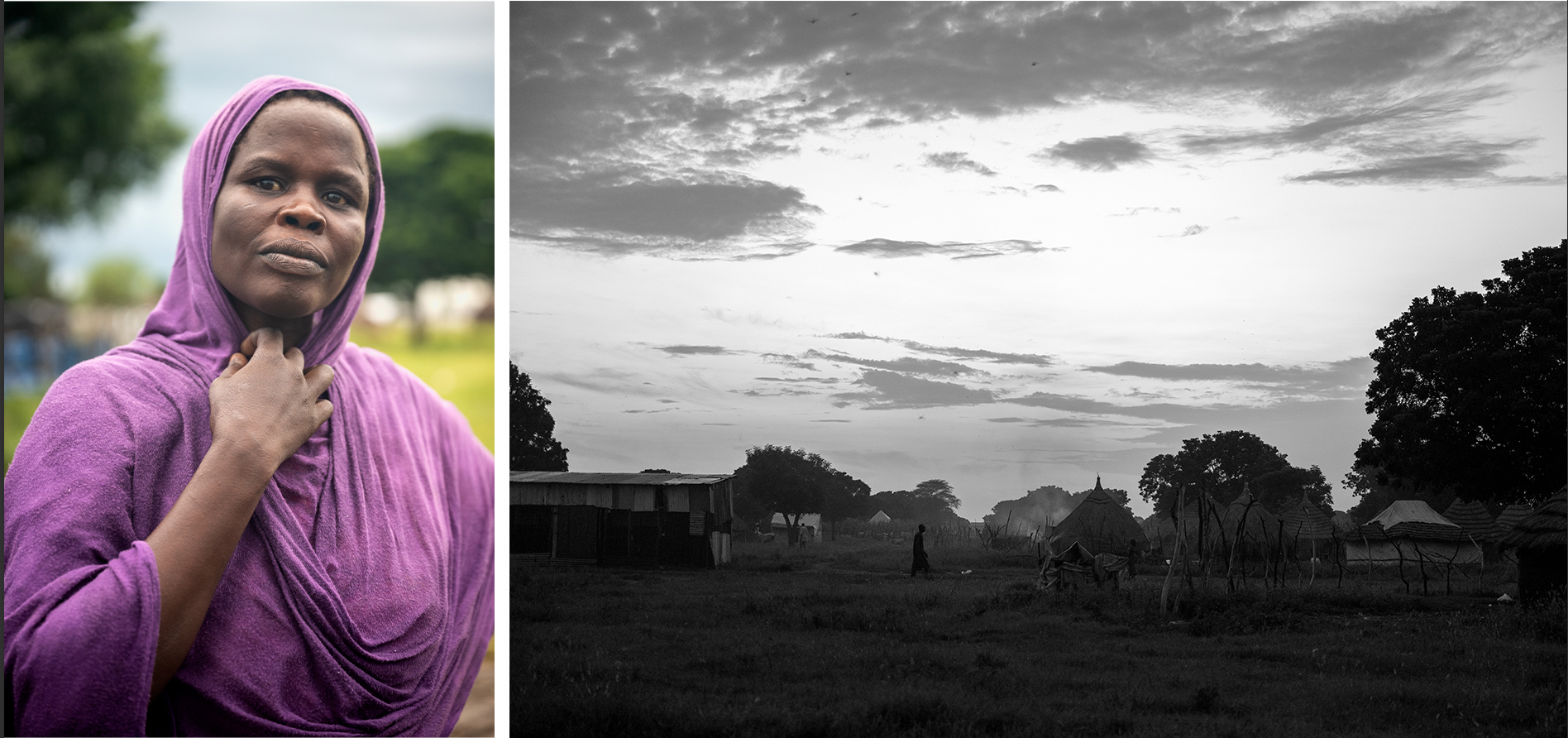
The soldiers are on their way
Eleven years earlier, Achuei is seven months pregnant with her first child. She has lived her entire life in the village of Nyongkuach in South Sudan. Many people here struggle with poverty, but most manage on their own, and neighbors help one another, as they always have in this area.
It is only a few years since South Sudan broke away from Sudan and became an independent state. At first, people were ecstatic and full of hope for the future. But then the generals began fighting over power, and civil war broke out.
Wild rumours spread through the village that soldiers are on their way. They will kill everyone, just as they have done in other places farther down the river. In panic, people pack what they can carry – bedding and kitchen utensils. The rest they are forced to leave behind.
Achuei sets off with a large group of more than a hundred villagers. They flee on foot.
A few of the elders stay behind. A few days later, they are killed, and the village is burned to the ground.
On foot through the bush
One thought runs constantly through the heavily pregnant Achuei’s mind as she drags herself through the bush:
“How is this affecting my unborn child? I just hope I don’t lose it.”
Every other day they are on the move, and every other day they rest. The youngest children are close to collapse, and Achuei’s body – swollen with fluids as a side effect of pregnancy – aches to lie down. But that is not an option. The soldiers could be right behind them.
After two weeks, they finally reach the border with Sudan.
“Now my child is safe,” she thinks with relief.
Here there is medical care and organisations distributing food. Now life can only get better.
The proudest day
After more than a decade in a refugee camp, Achuei’s hope for a better life in Sudan has been completely extinguished. As a South Sudanese, she is not allowed to move freely, and she cannot take a proper job.
“What are you doing here? Go back to your own country – you wanted independence yourselves,” Sudanese people shout at her and her fellow countrymen.
She gives birth to six children in the camp, and it is a daily struggle to provide them with enough food. But her oldest son goes to school – something she herself never experienced. The day he advances to second grade is one of the proudest days of her life.
Achuei dreams of returning to her homeland. But even though the civil war in South Sudan is officially declared over in 2018, conflict still lurks just beneath the surface. She feels it is too dangerous to take the children back.
That is, until a new and extremely bloody civil war breaks out – this time in Sudan.


Afraid to wait
With each passing day, the situation in the refugee camp becomes more and more unstable. In the end, Achuei decides that it is safer to return home to South Sudan.
But the journey is expensive for a refugee family of seven. Achuei has tried to earn money by taking various small jobs. In the end, she does not dare to wait any longer. And so she now stands by the truck, waving goodbye.
She says her farewell and shuts down her emotions. There is nothing else to do but to carry on – otherwise they will all die.
The next month is hard. There are no signs of life from the children, and she thinks about them constantly.
Finally, she manages to save enough to travel after them.
A tear-filled reunion
“Mom! Mooom! I never thought I’d see you again.”
Achuei has just been dropped off by the riverbank in the border town of Renk between Sudan and South Sudan when she hears her eldest son’s joyful cry.
He comes rushing toward her, tears streaming down his cheeks. It is hard not to cry herself.
Achuei’s plan has worked. All her children are alive. They have been staying with relatives here in the town while waiting for her. They are hungry, as food is scarce. Otherwise, everyone is safe, and she can finally breathe a sigh of relief.
The family stays in Renk for a month before continuing on to Achuei’s old village, Nyongkuach. But here too, everything has changed since she fled in 2013.


Too many crisis at once
After the village was burned down, it stood abandoned for years. The area changed hands many times during the civil war, and each time, civilians were killed.
The civil war officially ended in 2018, but the conflict still smoulders just beneath the surface. This has major consequences for the people of Nyongkuach. For example, it is too dangerous to transport food and materials here by river. Everything therefore has to be flown in, making it both difficult and extremely expensive to rebuild a community from scratch.
Nature has also changed since Achuei was a child. There were floods back then too – but nothing like this year, when climate change has caused the river to overflow its banks so violently that entire villages are underwater. All crops for miles around have been destroyed, and no one has enough to eat.
A U.S.-supported NGO provided the water supply until recently. But when Donald Trump came to power in January 2025 and large parts of American aid disappeared with the stroke of a pen, there was no more clean water. Now people have no choice but to drink the dirty river water, and diseases such as cholera and diarrhoea are spreading among children.
At the same time, more and more people are arriving. Like Achuei, they are fleeing the war in Sudan, or floods and fighting elsewhere in South Sudan. All of them must share the scarce resources.
Achuei has no idea how she will feed her children. But for once, luck smiles on her – just a little.


Dreaming of standing on own two feet
Achuei and her children have only been in Nyongkuach for a few days when they meet the people from Nile Hope – a South Sudanese organisation working to support communities in northern South Sudan.
With funding from the European Union, Nile Hope has just launched a project together with DanChurchAid, in which, over several months, they regularly provide cash amounts to the families who are struggling the most. Achuei and her family are invited to join.
Three times during the autumn of 2025, Achuei receives the equivalent of 85 EUROs on a white plastic card that can be used in local shops. It is enough for food and the most basic necessities. It is enough for a new beginning.
When the rainy season is over, Achuei will start planting a kitchen garden. Hopefully, it will be enough for her and the children to support themselves. And perhaps there will be enough money to send the children to school.
But more than anything, she dreams of peace. A quiet, ordinary life where the family does not have to fear soldiers and conflict – where the different ethnic groups of South Sudan can live together as good neighbours.
Achuei hopes she will never again be forced away from her children. That should not be too much to ask.
