
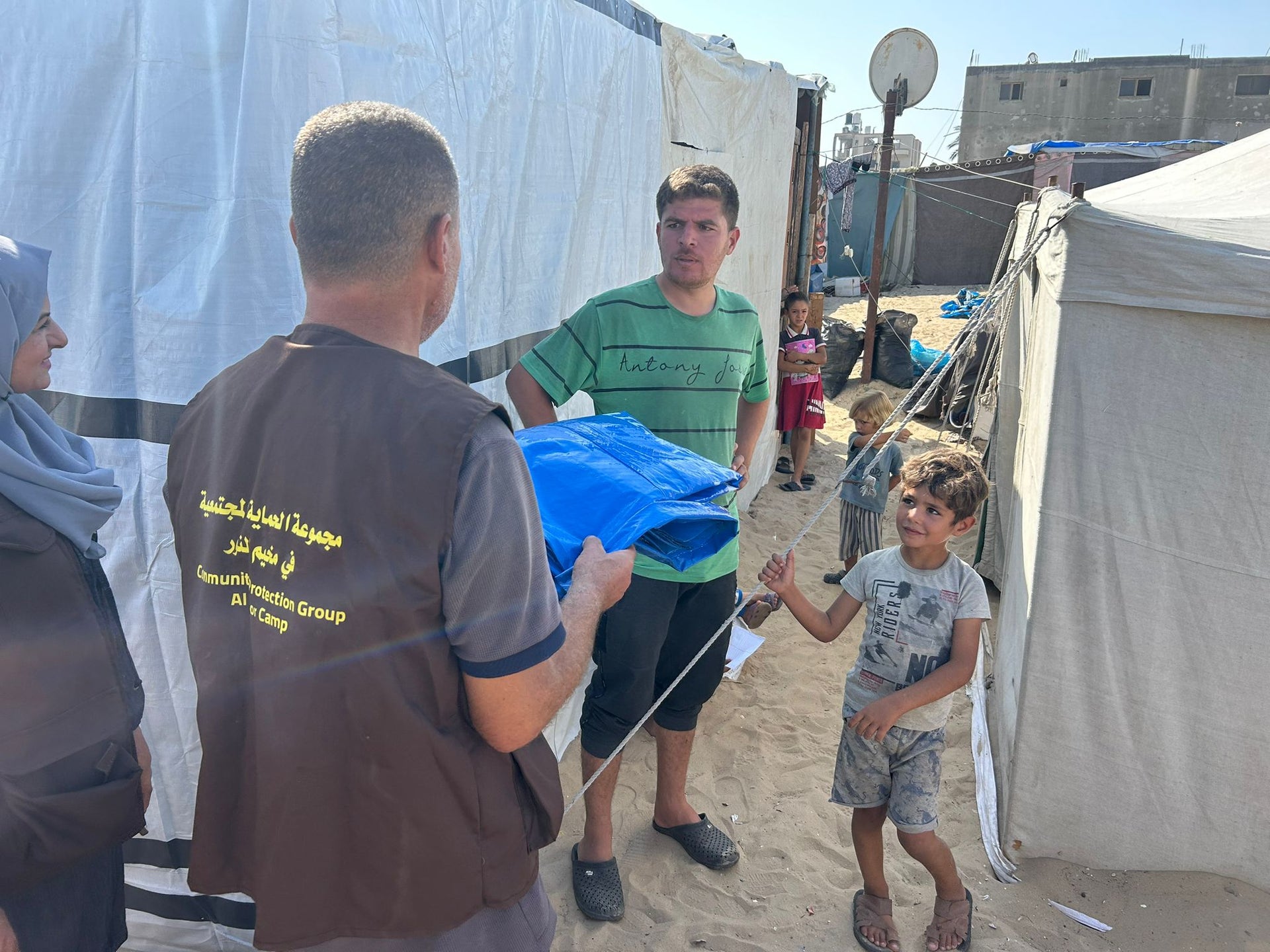
In 2025, at least 1,187 humanitarian workers were victims of major attacks and security incidents. Of these, 350 were killed, the second-highest toll ever recorded. Nearly all of those affected, 96%, were national staff: people working in their own countries, often in their own communities.
On 15-16 October 2026, the European Commission and the Irish Presidency of the Council of the EU will co-host the International Conference on the Protection of Aid Workers. Ahead of it, DanChurchAid (DCA) has signed a joint statement led by VOICE, the network of European humanitarian NGOs, calling on the EU and its Member States to seize the moment.
Promises made, action still needed
The EU has already made important commitments. All EU Member States have signed the Declaration for the Protection of Humanitarian Personnel, and the EU’s recent Joint Communication on humanitarian aid places the safety of aid workers at the heart of its humanitarian policy. But the signatories say these commitments now need follow-through. As the statement puts it, the EU and its Member States “must act to protect those who protect millions.”
The statement makes two main requests.
1. Hold those responsible to account
Attacks on aid workers continue largely because those who carry them out are rarely held responsible. The signatories ask the EU to:
- Condemn every attack, every time. Violations of international humanitarian law, the rules that protect civilians and aid workers in conflict, should be called out in all crises, regardless of political sensitivity. Applying double standards weakens the law and puts aid workers at greater risk.
- Use its full range of tools. The EU’s political, legal and diplomatic influence should be used to prevent atrocities and bring perpetrators to justice. This includes backing independent organisations that document violations and, where possible, national legal proceedings when aid workers are injured or killed, whatever their nationality.
- Protect the principles that keep aid workers safe. Humanity, impartiality, neutrality and independence are not abstract ideals. They are what allow aid workers to reach people in need and be accepted by communities. The EU should shield humanitarian action from political and security agendas, and write humanitarian exemptions into sanctions and counter-terrorism laws so that principled aid is not criminalised.
- Counter harmful information. False and hostile narratives are increasingly used to undermine aid organisations, restrict their access and expose staff to danger. The EU should publicly challenge anti-aid rhetoric, fund NGOs’ efforts to detect and respond to disinformation, support local media and community radio, and create rapid response mechanisms when threats to aid workers are known.
2. Fund and partner in ways that keep people safe
Funding cuts are weakening security and staff care, and the risk often falls on those least able to carry it: local and national organisations. The signatories ask the EU to:
- Fund the full cost of safe aid. This means covering security, prevention and support costs, with dedicated security budgets that local and national NGOs can access as easily as international ones.
- Share risk fairly. Partnership agreements should not pass disproportionate responsibility on to local partners. Risk assessments should also reflect differences such as gender and disability, rather than relying on one-size-fits-all approaches.
- Make Duty of Care a priority for everyone. Employers have a responsibility to look after their staff, including their physical safety, mental health and protection from abuse and harassment. At present, this care is uneven, and local staff face the greatest risks with the least support. The EU should fund psychological and legal support, including survivor-centred services, and sustain initiatives such as Saving Lives Together and the Protect Aid Workers mechanism.
- Invest in better data. Understanding who is at risk, and why, requires more and better information, collected ethically and with strong safeguards for privacy and consent.
DCA works with local partners and communities in some of the world’s most challenging contexts. Their safety is the foundation of everything we do. When aid workers cannot work safely, people in crisis go without food, shelter, protection and care.DCA
The statement is backed by organisations including CARE International, Oxfam, Save the Children, the International Rescue Committee, the Norwegian Refugee Council, Médecins du Monde and World Vision, alongside many European networks and national platforms.
From local volunteers to international NGOs, humanitarian workers save lives, relieve suffering and defend human dignity every day. The cost of inaction is not abstract. It is measured in lives.