

The human cost of conflict has been, and continues to be, immense. More than 118 million people are forcibly displaced worldwide, the vast majority as a direct result of war and violence.
This situation is further compounded by climate change, which increases humanitarian needs and deepens existing tensions in many of the world’s most conflict-affected contexts.
State of peace 2026
As the world marks the International Day of Peace 2026, the need for peacebuilding has rarely been greater.
In 2025 alone, global military expenditure reached the highest level ever recorded by the Stockholm International Peace Research Institute (SIPRI), accounting for 2,5% of the world’s gross domestic product (GDP), while 49 armed conflicts involving large-scale and sustained violence were taking place around the world.
At the same time, violations of International Humanitarian Law (IHL) also reached alarming levels, with increased reports of attacks on civilians, health services, aid workers, and journalists, as well as the use of starvation tactics, and recourse to child recruitment, and sexual violence.
On 21 September, DCA celebrates local peacebuilders. Through the theme “Peace starts here: invest in local peace”, we shine a spotlight on the people and communities proving that lasting peace concerns all, and is built from the ground up.
Of the 15 countries projected to be most vulnerable to climate change in 2026, 13 are affected by violent conflict. Yet the resources available to respond to crises and conflicts are shrinking.
While military spending continues to rise, investments in meeting urgent needs, addressing the root causes of conflict, preventing violence, and building lasting peace are failing to keep pace.
Everyday people choosing peace every day
Against this backdrop, ordinary people choose dialogue over division, cooperation over conflict, and hope over fear every day.
Their actions remind us that peace is more than the absence of violence. It is built through countless small efforts led by people in their communities.
In conflict-affected communities, young people, women, faith leaders, and civil society organisations are working to rebuild trust, reduce violence, and create opportunities for people to live together peacefully.
At a time when the world is investing record amounts in war and destruction, their stories offer a different vision of what is possible. They remind us why investing in peace ir more important than ever.
“In the past, if something happened, all I could think of was using violence. After learning about my rights, I would not dream of using violence.”
Balamoto Elkanah Shalom – Sibut, Central African Republic
Investing in young people
The African continent is home to the youngest population in the world with more than 6 out of 10 people being under the age of 25. Young people in Africa are the primary drivers of the continent’s future, and critical catalysts for change. Yet, many of them also face vulnerabilities, and are among those most affected by instability.
In the Central African Republic (CAR), young people make up nearly 40% of the population. They are often described as “unstable, disengaged, or dangerous” – but youth themselves tell a different story. Young people in Sibut speak clearly about what holds them back: lack of access to opportunities, lack of trust, and a civic space that routinely excludes them from decision-making and sounding out their opinions.
And the Central African Republic is not an easy country to be young in – the amount of barriers facing young people are numerous. High unemployment rates, lack of access to education, and limited economic opportunities leave many feeling demotivated about their futures, and marginalised.
These barriers, and the hopelessness that can accompany them, may lead some young people to turn towards unhealthy coping mechanisms, such as substance abuse, or risking their lives carrying out dangerous or illicit activities.
Insecurity, administrative hurdles, and social stigma – particularly for young women and informal workers – further restrict young people’s ability to organise themselves, speak out, or build livelihoods. Despite being active in their communities, they are often mistrusted by authorities and seen more as a threat than a resource.
Pathways to Empowerment – and peace
With support from the United Nations Peace Building Fund (UNPBF) DCA and partners have supported the advancement of the voice of young people and promotion of peace and democracy in Central African Republic through the Pathways to Empowerment project.
A project that has changed the life of one young man, Balamoto Elkanah Shalom, from the town of Sibut on many levels. He says he has become much more aware of which issues lead to poverty and violence – for himself and for his community.
“One of the issues we face in Sibut is that some children don’t attend school. Their parents prefer to send them to the market to sell things and earn money.
That’s a violation of children’s rights; it’s wrong. And then there are the quarrels between men and women.
Disputes are found everywhere – they are very common.
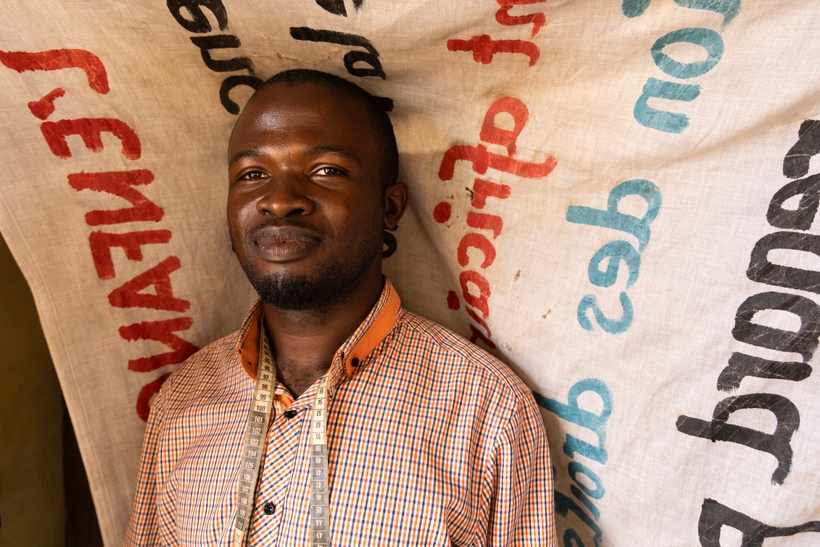
Also among young people. It is a form of violence that undermines human rights,” says Balamoto.
The new awareness has not only changed Balamoto’s own life – it has also changed his perspective on his community.
“If everyone, all the young people, the entire population of Sibut and the surrounding area could do what I do, you would see that it would significantly reduce the levels of poverty and violence in our town.”
Balamoto has decided to use his new found voice in the service of the people and plans to run for office in the next round of municipal elections – and ultimately his goal is to become mayor of Sibut.
Once in office he believes that he can provide a broad platform for young people to speak their minds – while ensuring that human rights are upheld, that children can go to school and young people are offered more opportunities, and peace will take root in his community.
“In the past, women encouraged men to go and fight to prove their manlihood. Today, we encourage our husbands, brothers, and sons to choose peace.”
Nawos Nakhali – member of Peace Committee in South Omo, Ethiopia
Women and peace
Whereas men are more likely to get killed during conflicts or war because of their role as combatants – or the perception that they may be potential combatants – women are more likely to be displaced, be exposed to sexual violence and poverty.
Women and children make up the large majority of displaced people – and are therefore more likely to experience the long-term effects of displacement such as distress, disease, and hunger.
Seeing the bigger picture
But even if women bear the heavy, long-terms consequences of conflict – often while trying to bring up the next generation – they are rarely invited to participate in peace building.
Even if research shows that peace agreements last longer and are stronger if women are part of reaching them.
Women bring a different perspective to the table – and tend to look beyond immediate disagreements and see the larger community needs and dynamics that contribute to conflict.
Realities of being female and displaced
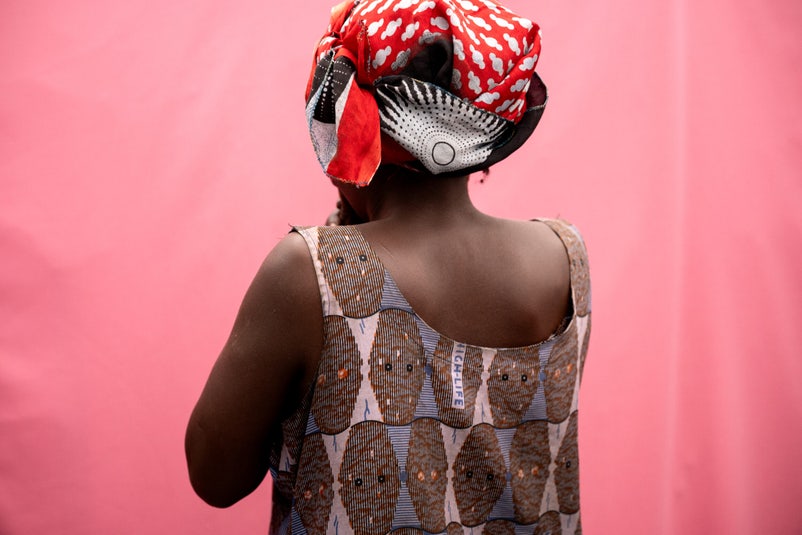
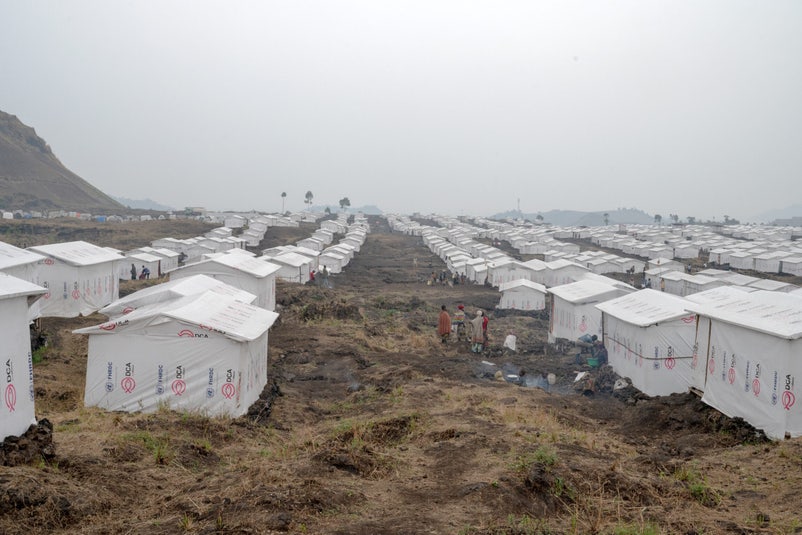
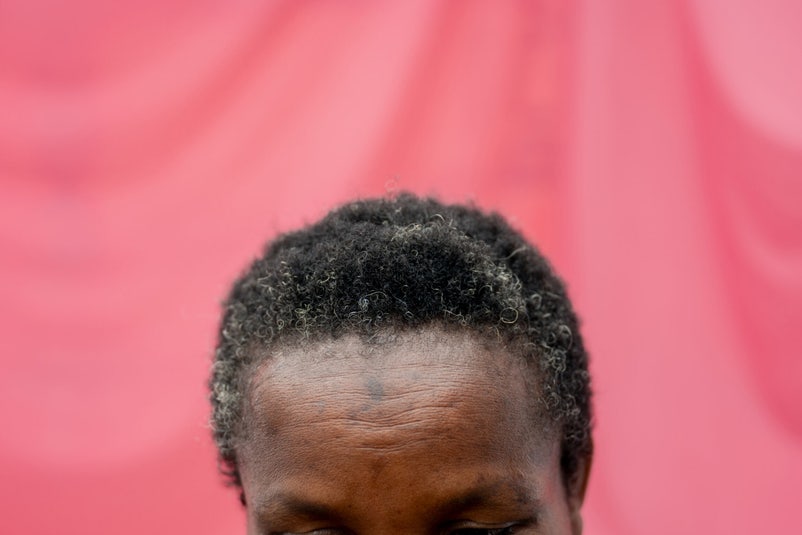
In eastern DR Congo, violence against girls and women is referred to as a weapon of war. Ten kilometers from the frontlines there are two camps for people who have all been forced to flee. Even in a camp for displaced persons, there are children to care for, meals to cook, and firewood to gather. Everyday tasks are marked by fear and the constant struggle against hunger. Moving around alone, especially as a woman, comes with great risks. Read more
Rites of masculinity as drivers of violence
In a small village of the Nyangatom area of South Omo in Southern Ethiopia, Nawos Nakhali represents women’s voices in the local peace committee – or Community Action Group.
The Nyangatom are a pastoralist group that has historically faced rivalry with neighbouring groups including the Dassenech and Hamer in Ethiopia and the Turkana in Kenya.
Cattle raids, disputes over access to grazing land as well as fishing rights have been frequent occurrences over the years but with the proliferation of small arms and light weapons, these rivalries have resulted in deadlier clashes which in turn have brought acts of retaliation resulting in a cycle of violence.
Traditionally these clashes have also played a role as a rite of passage for the young men of the Nyangatom tribe. Fighting is what turns boys into men – killing a member of the other tribe gives status. And here the women play an important role, says Nawos.
“The women here have always encouraged the men to go and fight to prove they are real men,” she explains and says “Now we encourage them to stay home.”

The change in the attitude comes from the Peace Committee – or Community Action Group – that was established in the village as part of the SPREAD: Peace and Resilience project. An EU funded project that spans the borderlands between Ethiopia, Kenya and South Sudan with the aim of ending conflict between local communities by addressing the drivers behind it.
“We have learned that conflict creates an endless cycle of suffering, and we actively discourage fighting,” says Nawos. She says that the community had ways of dealing with conflict before the peace committee was created – but conflicts were only dealt with after they happened.
Now the members of the committee identify what leads to conflict and actively work to prevent them from happening. The committee see women as happening an active role to play in this prevention work and discouraging violence from happening.
“When they came they took all my cows except one. If they found me with cattle, they would kill me.”
Jacob – returnee farmer in Chukudum, South Sudan
Displacement
Around 120 million people are displaced in 2026 – uprooted and forced to leave their homes and lives behind. The majority of them because of conflict.
Being forced to leave one’s home comes with many challenges – ranging from how to cover basic needs and how to survive, to the longer-term uncertainty of what the future holds.
DanChurchAid and partners offer different types of support – from a plate of food to cash support and on to reskilling for a new beginning.
You can see a sample of the people we work with below. What all of them have in common is that re-building and taking charge of their own lives depend on one thing: peace.

A cup of tea, a drop of hope
There is a saying Gamar Mohammed Ahmed returns to on days where things are hard; “There is nothing like home.”
She repeats it – as if to keep something precious from slipping away.
But the home she has in mind – the house in Khartoum, Sudan, where she raised her six daughters and built a life with her husband – is now empty, stripped bare by war, too dangerous to return to.
Instead Gamar now runs a tea shop funded by DanChurchAid, which provides a financial lifeline for the family – as well as hope.

Conflict, Cattle Raiding, and the Decision to Flee
Jacob remembers how “people were being killed, and I was afraid of being killed too.”
He describes an entire community living in fear. His livelihood vanished almost overnight when raiders stole his herd.
Faced with loss and danger, Jacob made the decision to leave the family’s piece of land in Chukudum, South Sudan, and seek sanctuary in the nearby mountains.
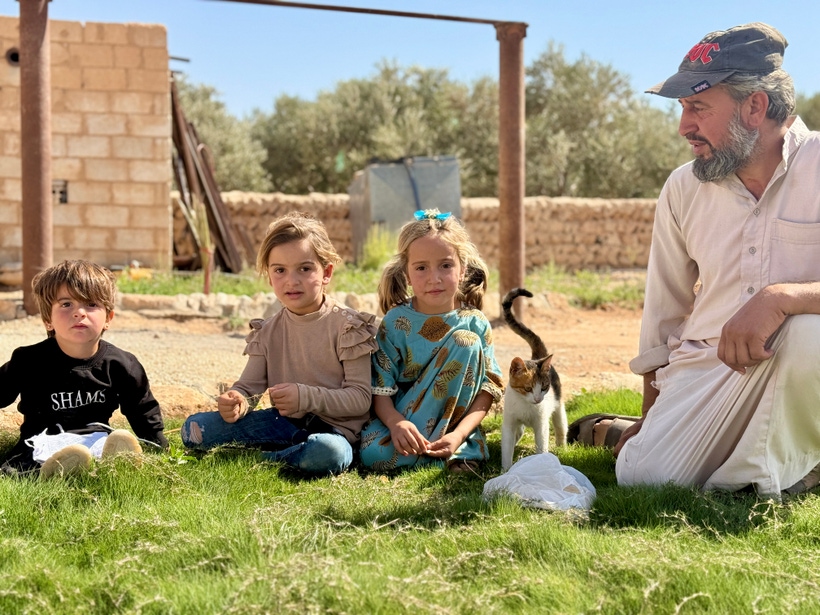
After 20 years he returned home – and is now building a life as a farmer with support from DanChurchAid.
Clearing the past, cultivating the future
When ISIS took control of Mohammed’s village in 2017 he and his family would not abandon their home. At least not until the militants arrived on his doorstep and threatened to kill him – and his entire family.
The family moved to shelters outside town. And soon after their house was struck during fighting – and reduced to rubble.
After ISIS was defeated they were afraid to go back – they frequently heard explosions when explosives were triggered by animals or vehicles in the area.
The farm that used to provide food and sustenance for Mohammed and his family now lay abandoned – too dangerous to use. Until a Humanitarian Mine Action team from DanChurchAid arrived.

From hardship to hairdresser
Viola fled South Sudan in 2016 with her mother and siblings – and ended up in Bididi refugee settlement in Uganda.
As the second-born in a family of eight, she quickly faced the pressures of survival in an unfamiliar environment with limited economic opportunities.
Looking for solutions she jumped at the opportunity to get married early – a path that lead to abuse and unhappiness. And Viola returned home to her mother. With no skills and limited education, she had few opportunities to stand on her own feet.
Then Viola heard of an opportunity to train as a hairdresser. She enrolled and three months later she opened her own salon. Today, she is not only standing on her own feet – she has become a trainer in the same program. And a role model for others.
Read Viola’s story
“They just found these young men fishing without guns. They fired at them. They killed many of them.”
Lotome Ereng – group leader of fishing group by Lake Turkana, Kenya
Changing weather drives conflict
Droughts, floods and unpredictable weather do not in themselves create conflict – but their effects on nature and its ressources can make conflicts worse. Loss of land to farm on, grazing pastures drying out, and villages flooding are some of the consequences of climate change.
For fishermen on the shores of Lake Turkana climate change and conflict also go hand in hand. Even if violence sometimes seems to need no reason to descend on the fishermen.
Lotome Ereng and the fishermen he leads feel the effects of climate change daily – and while some can be of benefit to the fishermen others can cause trouble.
The Turkana Lake is expanding. It has risen by as much as 10 metres since 2011. The surface area has increased by more than 10%.
For people living here it means that some villages are now under water, others are on islands. Grazing lands are now on the lake bed.
Some people have been displaced. Cattle has to be taken elsewhere for grazing. And while the area for fishing has also expanded nobody knows who the new areas belong to. All of the aforementioned can potentially cause conflict.
Lotome Ereng has been fishing for 16 years. Like many Turkana men, his livelihood is not tied to the lake alone. He also keeps livestock: three cows, 19 goats and nine sheep.
Fishing brings income, while livestock remains central to family life, status and marriage traditions.
In February 2025, Lotome lost two relatives in a massacre linked to conflict between communities on the Kenyan and Ethiopian sides of the border. Around 40 people were killed.
“During the massacre, two of my relatives, the sons of my brother, were killed,” he says and adds “that has really affected me and the family.”

The two young men who lost their lives, Lokallen and Ikidur, were in their early twenties.
The violence was part of a longer cycle of theft and retaliation around fishing equipment, livestock and access to resources.
“The cause of these killings is mostly theft of livestock,” he says. “There is also fighting for scarce resources. And there is theft of fishing nets,” says Lotome.
Lotome was selected to go to the neighbouring Dassenech community to mediate on behalf of the Turkana community. He was angry, but says that they were encouraged not to retaliate. To stop the cycle of violence. And they listened.
Lotome is convinced that the dialogue helped prevent revenge killings – and so far the cycle of violence seems to have stopped.
Through local partners DanChurchAid has supported the efforts to establish dialogue and mediate between the two groups. In addition DanChurchAid has provided new boats and equipment to the group of fishermen on the Kenyan side, and the same has been done on the Ethiopian side.
Whereas tackling climate change requires its own set commitments and investments – building peace goes hand in hand with ensuring that the risks of conlict worsened by the effects of climate change are anticipated and mitigated against with and by all stakeholders.
Peace and progress requires investments in the local communities – and in their willingness to choose dialogue over conflict.
DanChurchAid and peace
DCA believes that lasting peace is built by communities themselves. Across its country programmes, DCA works hand-in-hand with community members, faith actors, civil society organisations, women and young people to address the drivers of violence, rebuild social ties, restore trust, and strengthen peaceful coexistence.
DCA understands conflict prevention and peacebuilding as a broad range of approaches that seek to prevent violence, transform conflict, and promote lasting, just and sustainable peace.
DCA’s approach starts with local leadership and places communities at the centre of analysing and responding to the challenges they face. This means identifying the drivers of conflict, understanding the factors that strengthen peace, and supporting inclusive, context-specific solutions. Those living with the consequences of conflict every day are often best placed to understand local dynamics, build trust across divides, and lead sustainable change. Local actors, everywhere, are always the best placed to understand the tensions that affect them day in day out, to build trust across divides, and create lasting change.
Across the countries where it works, DCA supports a wide range of conflict prevention and peacebuilding activities, including: dialogue facilitation within and between population groups, social cohesion initiatives, peace education and messaging, restoring local peace structures, inclusive and cohesive natural resource governance, conflict and gender sensitivity training, etc.
Peacebuilding is integrated across DCA’s humanitarian and development work through its Humanitarian-Development-Peace (HDP) Nexus approach. By responding to immediate needs while simultaneously addressing the drivers of violence and strengthening community resilience, DCA and its partners contribute to creating the conditions for people to recover from crises, live safely and with dignity, and build the foundations for lasting and just peace.

